
Research
My research expertise lies in understanding how anthropogenic and environmental pressures affect marine biodiversity, ocean governance, and coastal communities. I bring an interdisciplinary perspective that integrates natural and social science approaches to inform adaptive, inclusive, and scalable strategies for managing marine ecosystems — from coastal waters to the high seas. Spanning global to local contexts, my work has employed methods including policy analysis, spatial modeling, and stakeholder surveys to support more holistic, ecosystem-based management. This expertise loosely centers on three core areas:
(1) High seas biodiversity governance
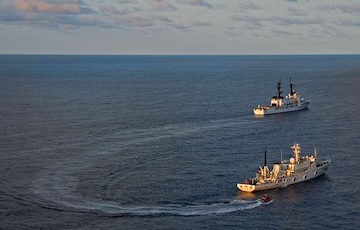
The effective conservation of marine biodiversity across and beyond national jurisdictions remains a major global challenge, due largely to fragmented governance systems and limited legal protections in the high seas. Efforts like the Biodiversity Beyond National Jurisdiction (BBNJ) treaty — also known as the “High Seas” treaty — represent critical steps toward more sustainable and equitable ocean governance. My expertise includes examining how fisheries and biodiversity policies interact across scales to shape conservation outcomes, and how governance frameworks can better support the protection of marine biodiversity in international waters.
Related publications and activities
- Santos, B.S., Devereaux, S., Gjerde, K. M., Chand, K., Martinez, J., Crowder, L.B. 2022. The diverse benefits of biodiversity conservation in the global ocean beyond areas of national jurisdiction. Frontiers in Marine Science 9:1001240.
(2) Climate-driven shifts of highly migratory marine species
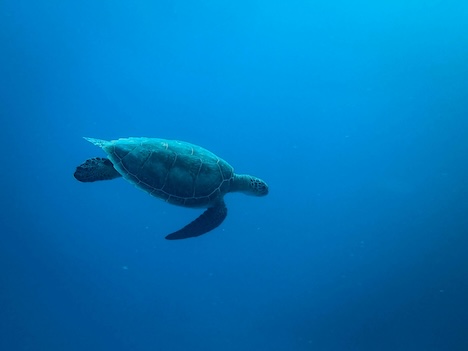
The long-distance movements of highly migratory marine species across domestic and international waters create challenges for effective management and conservation. As species shift their habitat use in response to changing ocean conditions, existing governance frameworks can struggle to keep pace, leading to gaps in protection and cooperation. My expertise focuses on using spatial analyses to understand how climate change may shift species movements across borders, and on exploring the governance challenges that arise as species move between different jurisdictions.
Related publications and activities
- Santos, B.S., Hazen, E.L., Welch, H., Lezama-Ochoa, N., Block, B.A., Costa, D.P., Shaffer, S.A., Crowder, L.B. 2024. Governance challenges in the management of Pacific predators under climate change. npj Ocean Sustainability 3(22).
- Research collaborator with LoggerheadSTRETCH, analyzing governance complexities emerging from climate-driven sea turtle redistributions in the Northeast Pacific to inform adaptive, responsive management strategies
(3) Social-ecological dynamics of small-scale fisheries

Related publications and activities
- Santos, B.S., Wabnitz, C., Singeo, A., Sato, I., Bernstein, M.S., Birkenmayer, K., Crowder, L.B., Ferguson, C.E., Fröelicher, T.L., Kaster, C., Lewis, S., Micheli, F., Raemakers, S., Reygondeau, G., Wong-Parodi, G. Social-ecological vulnerability and adaptive capacity of small-scale fisheries in Palau. In Review
- Research contributor to ORRAA’s Gender and Climate Change Factsheets, highlighting women’s vital roles in small-scale fisheries to inform equitable, gender-responsive policies that support resilient coastal communities